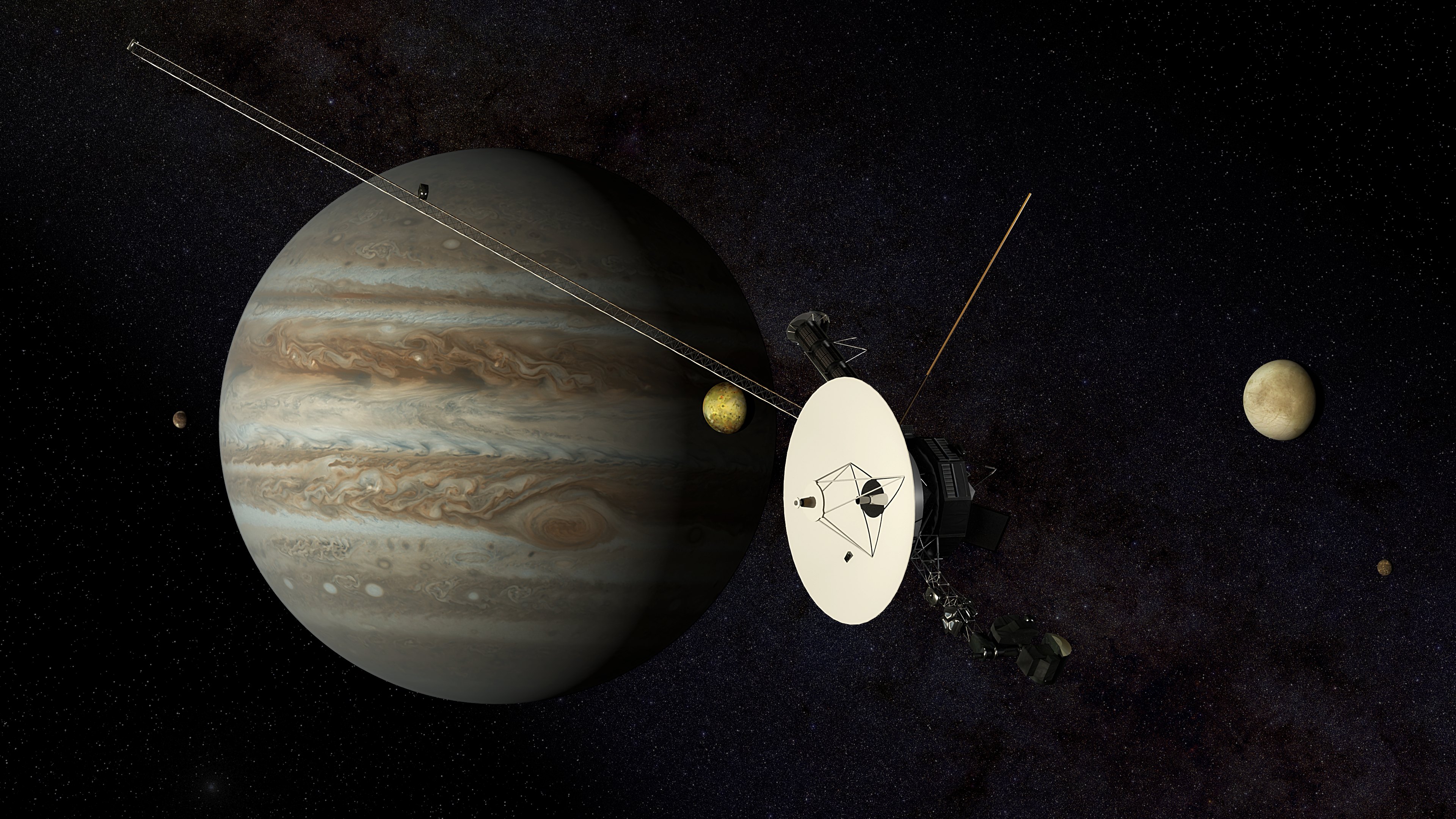
Right now
—
kilometres from where you are sitting,
something we built in 1977 is still travelling.
It was made to last five years.
That was 49 years ago.
It carries a message.
Addressed to no one. Meant for anyone.
It will outlast our cities. Our languages. Perhaps the Earth itself.
In the emptiness between the stars, almost nothing can wear it down.
One day it may be the last proof that we were ever here.
One small voice, from one small corner of the Milky Way.
Proof that we were here
Voyager
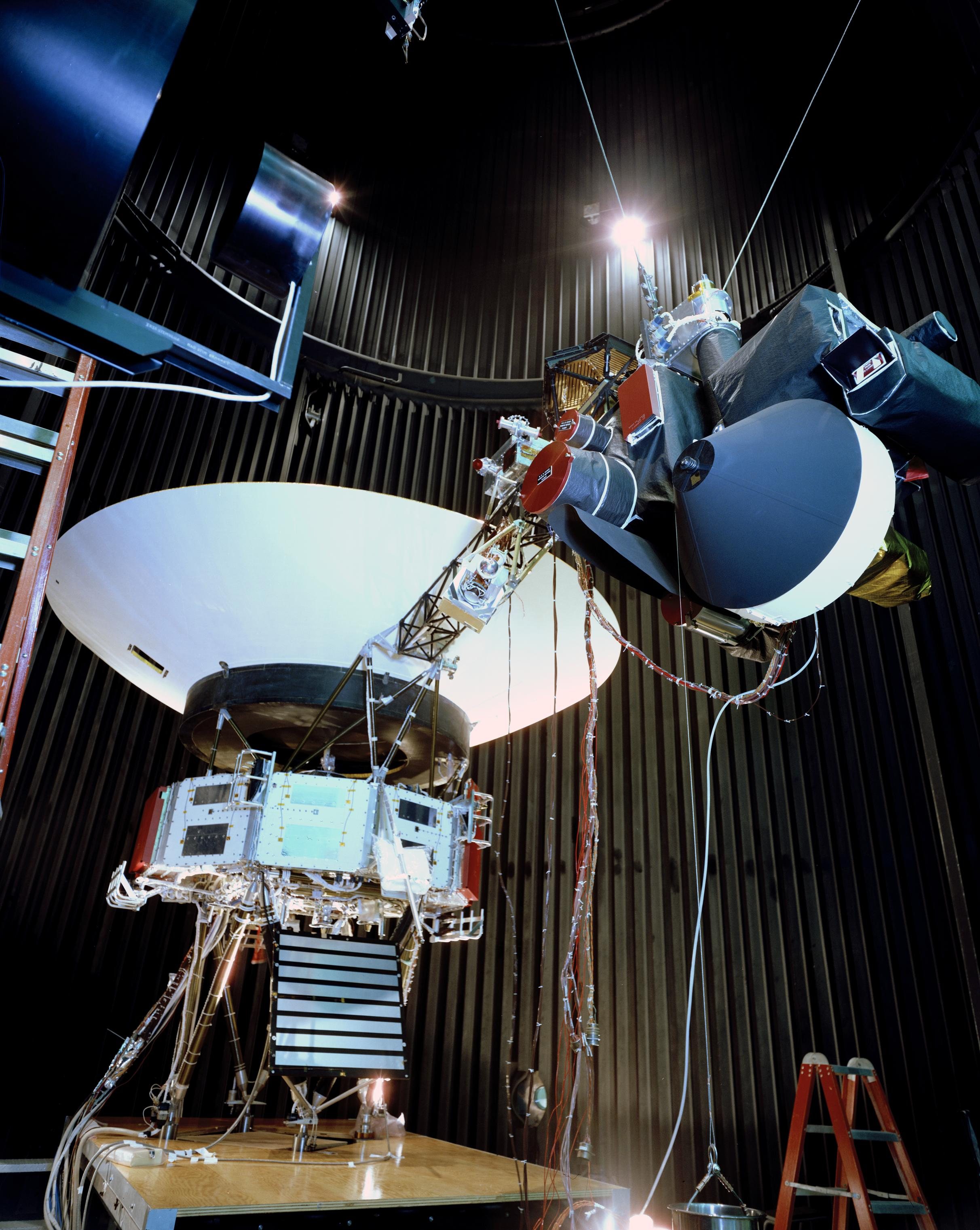
Pasadena, California
Two spacecraft, built by hand.
This is a full test model in the chamber where they were put through the cold and vacuum of space.
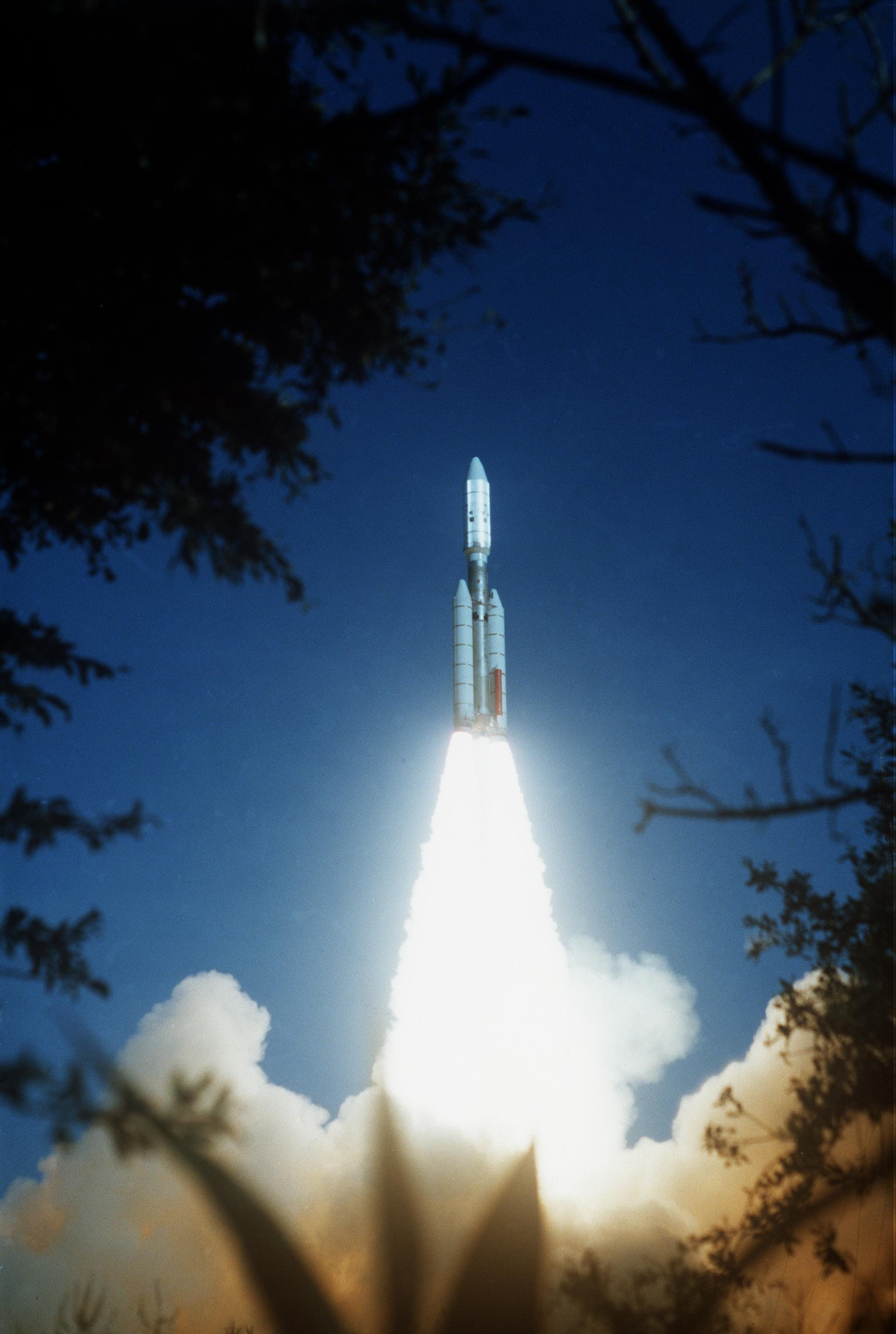
Summer 1977
Two launches, sixteen days apart.
The outer planets had lined up in a way that happens once every 176 years. Miss it, and the next chance was in the 2150s.
Before they left
We gave each of them something to carry.
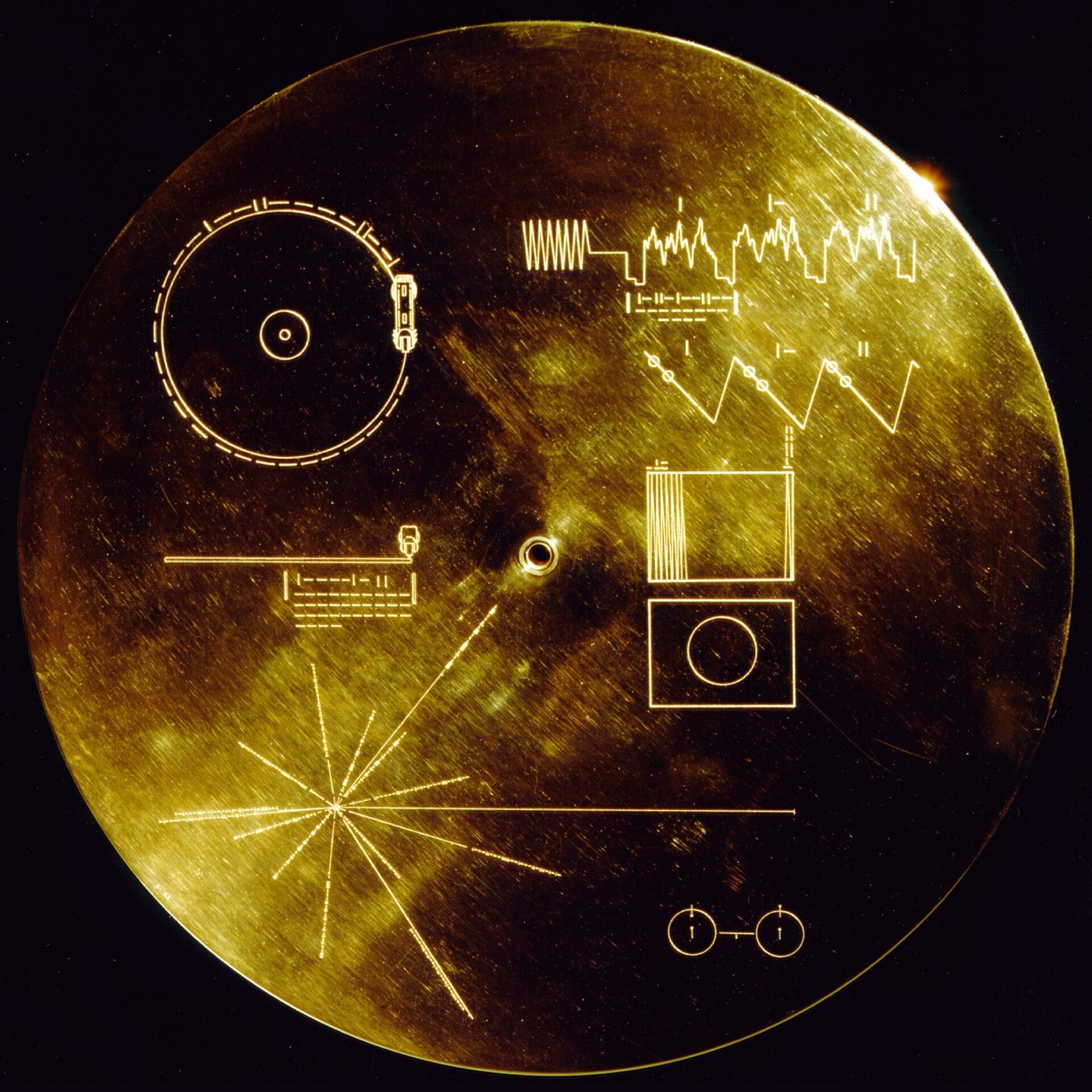
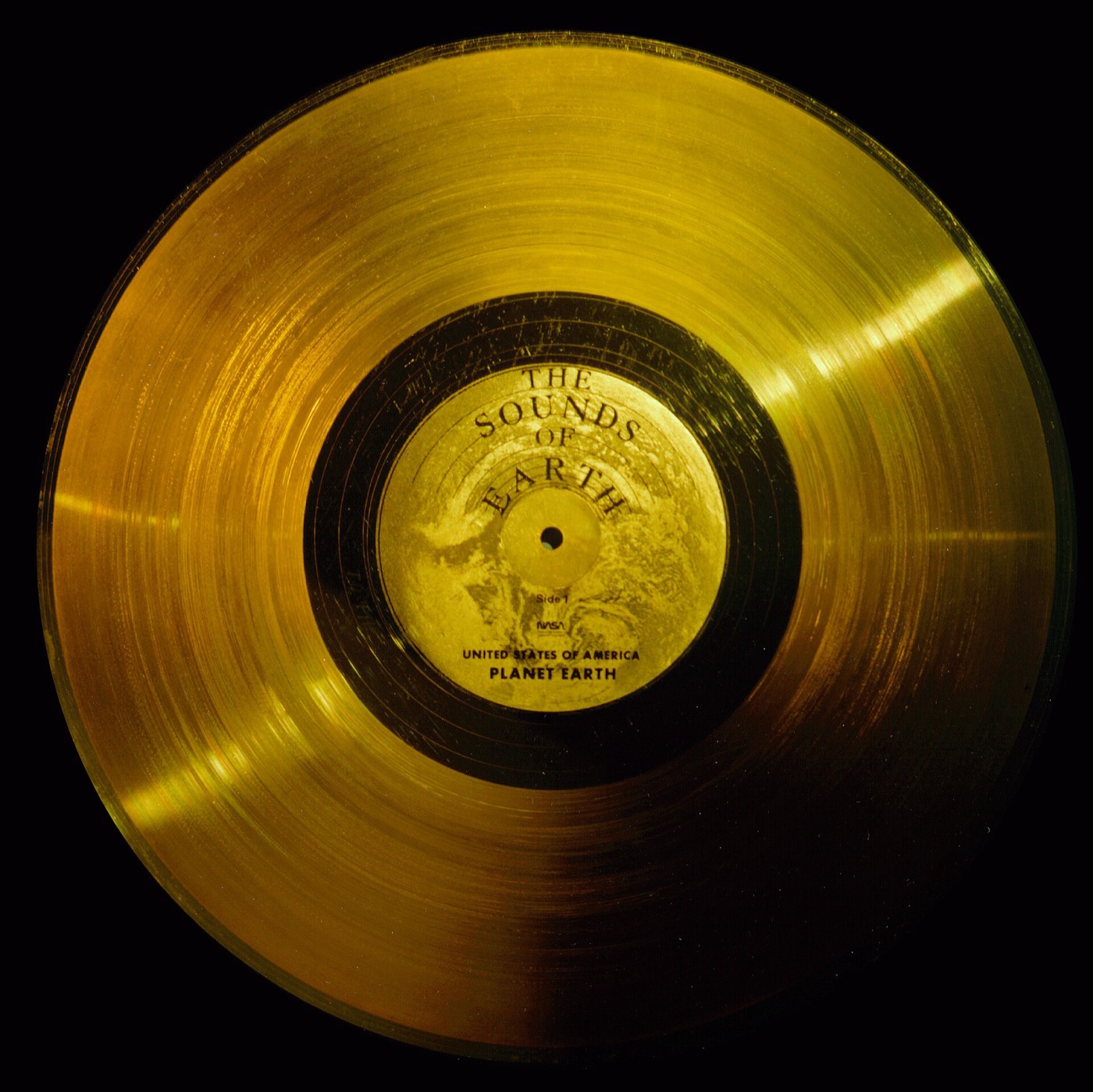
A golden record.
With instructions for playing it etched on the cover, in case anyone ever finds one.
A small team had less than a year to decide what to say on behalf of Earth. They began with hello, in 55 languages.
“Hello from the children of planet Earth.”
English
“Friends of space, how are you all? Have you eaten yet? Come visit us if you have time.”
Amoy
“We are happy here and you be happy there.”
Rajasthani
Then Bach, and Chuck Berry. Rain. Laughter. A kiss. A mother and her baby.
And the brainwaves of a woman thinking about what it is like to fall in love.
“We are attempting to survive our time so we may live into yours.”
From the message on the record
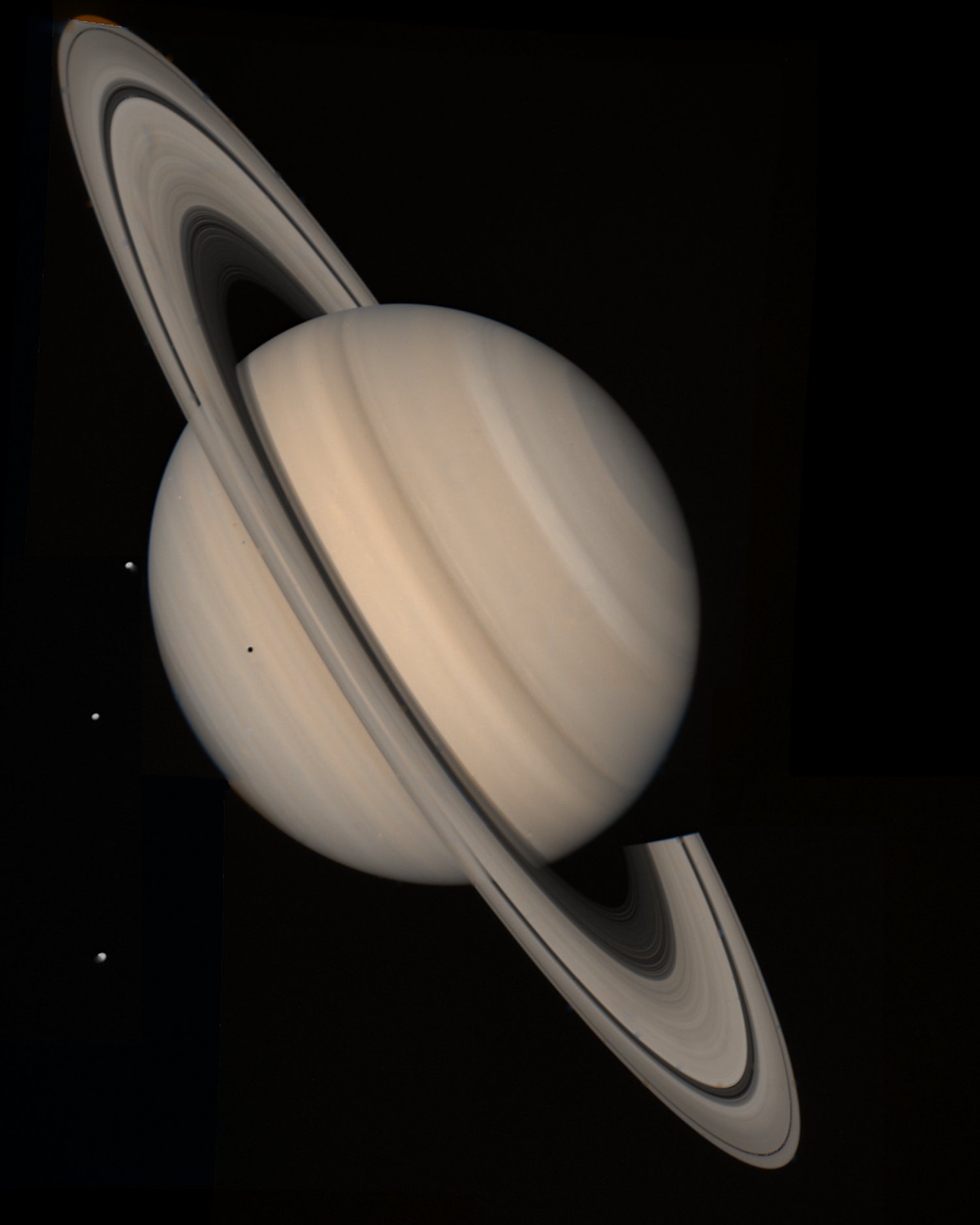
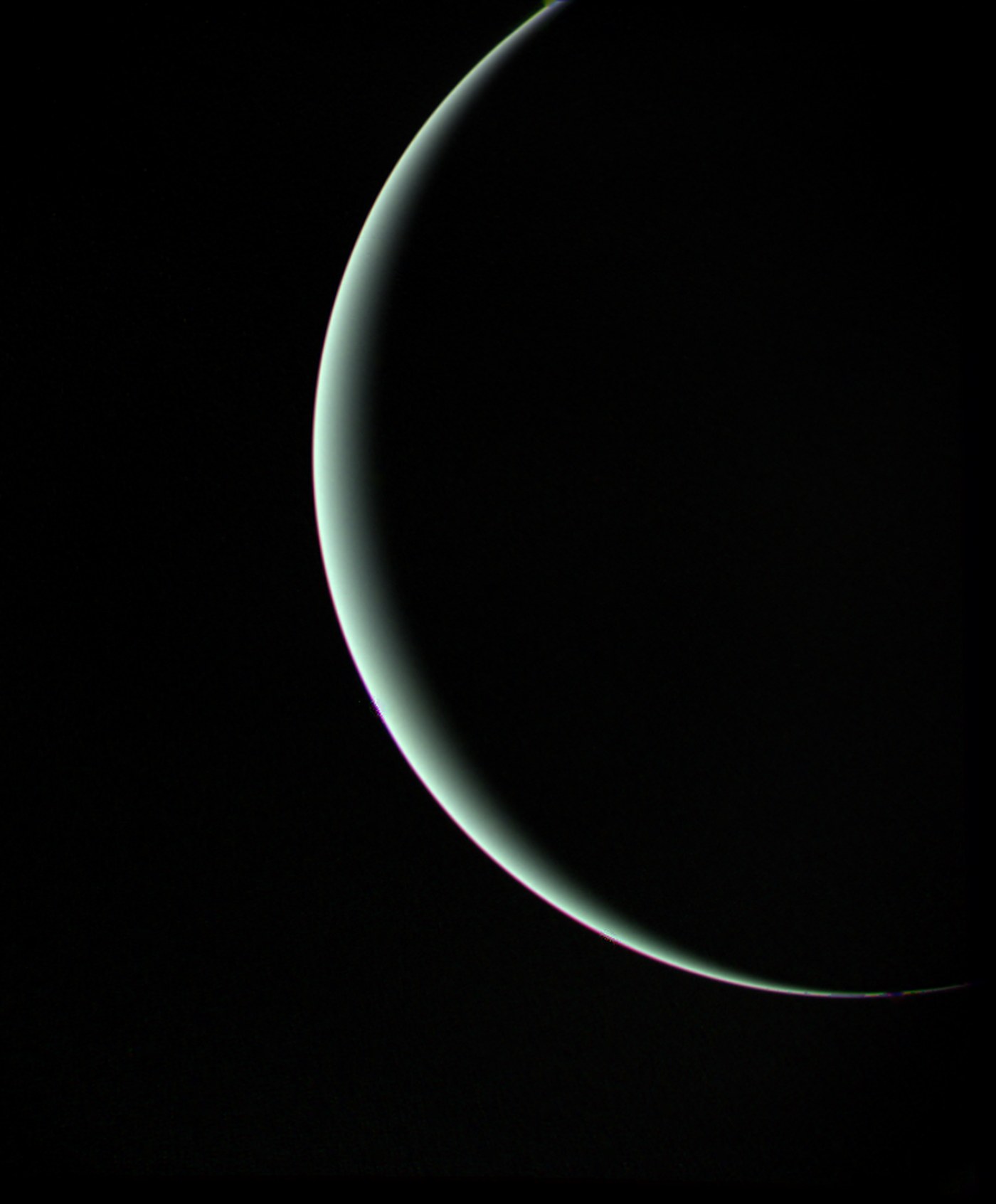
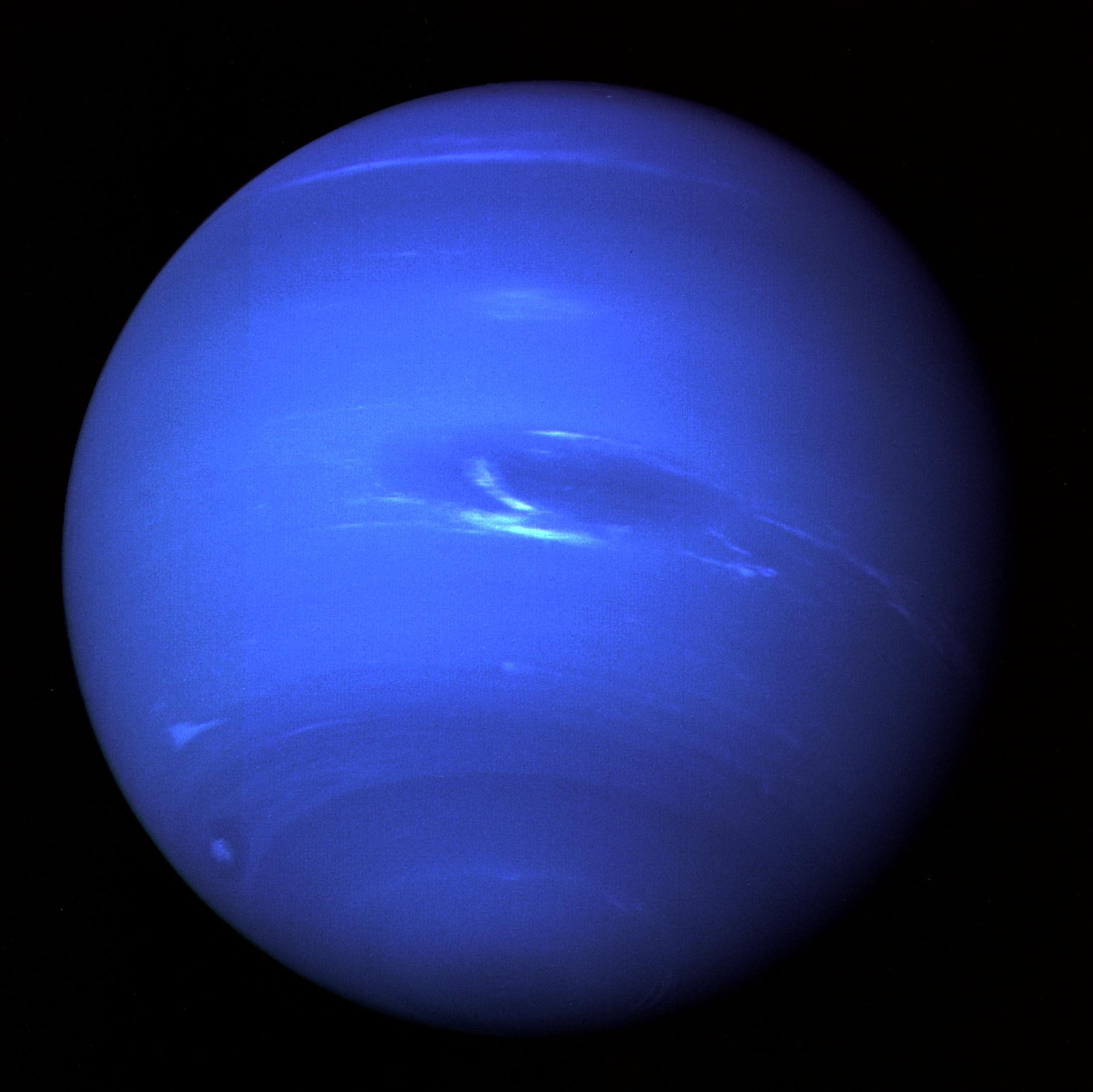
14 February 1990
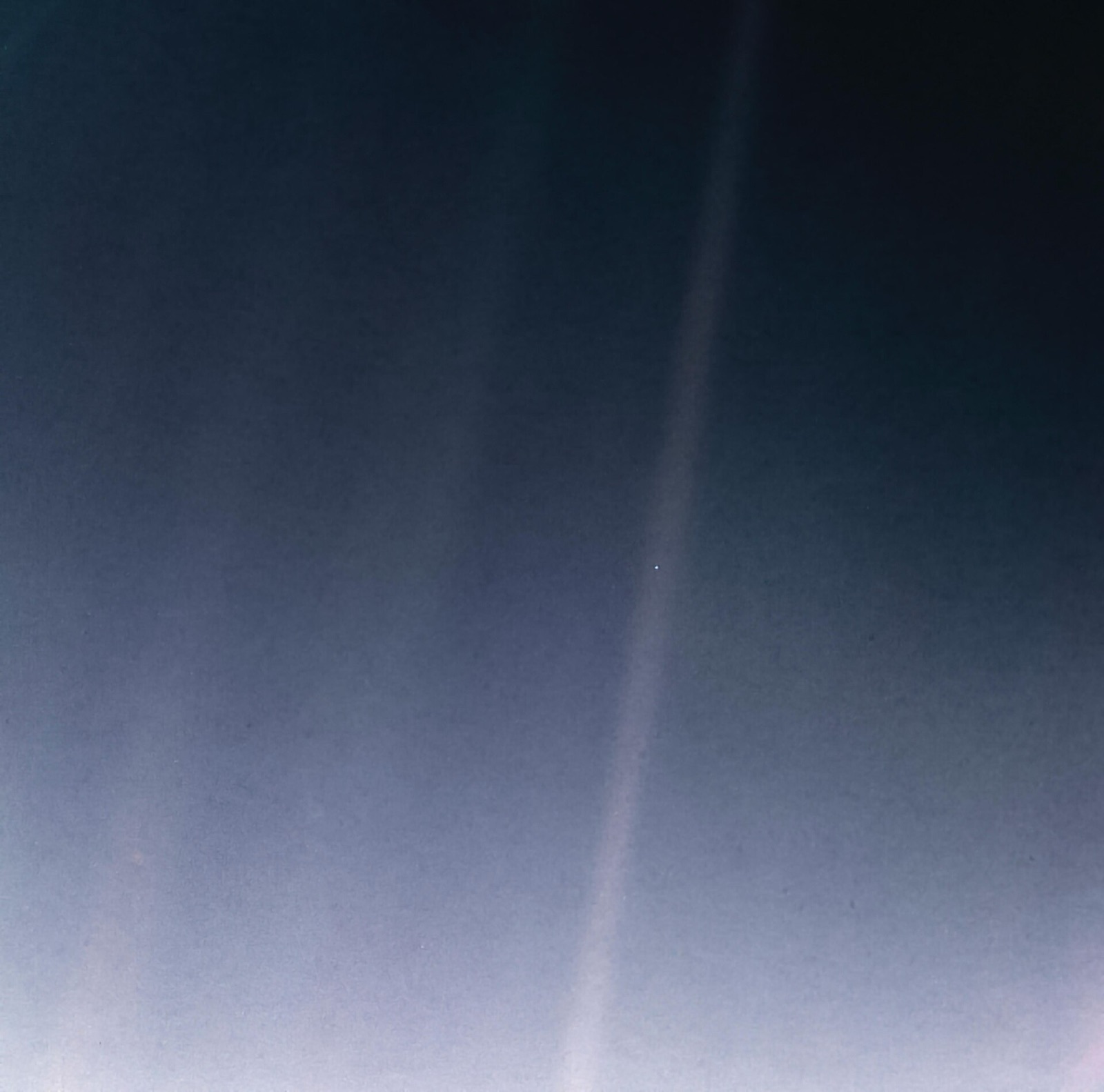
With no worlds left to visit, Voyager 1 is told to turn around and take one last picture.
This is the picture.
Taken from 6 billion kilometres away. The bands are sunlight scattered in the camera.
That dot is Earth.
Less than one pixel wide.
“That's here. That's home. That's us.”
Carl Sagan
Thirty-four minutes later, its cameras were switched off for good.
Then, nothing.
No more planets. Only distance, for decades.
August 2012
Voyager 1 crosses the edge of the Sun's reach and enters the space between the stars.
November 2018
Voyager 2 follows it out.
They are the only things we have ever made that have left.
49 years at 61,000 km/h.
Pull back until the nearest star fits on the screen, and all of it has covered 0.064% of the way. Less than the width of the dot.
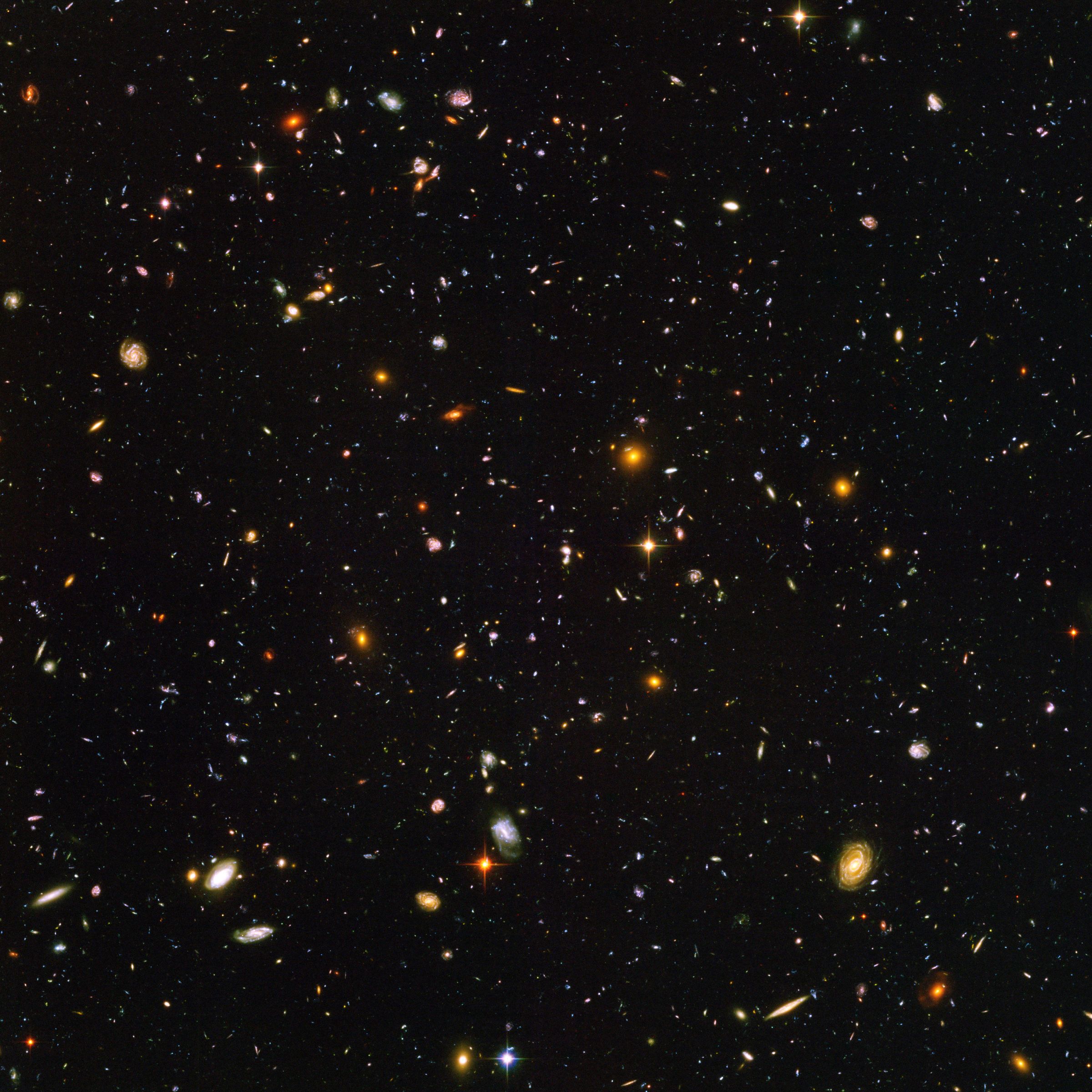
Our galaxy is 37 million times wider than that journey.
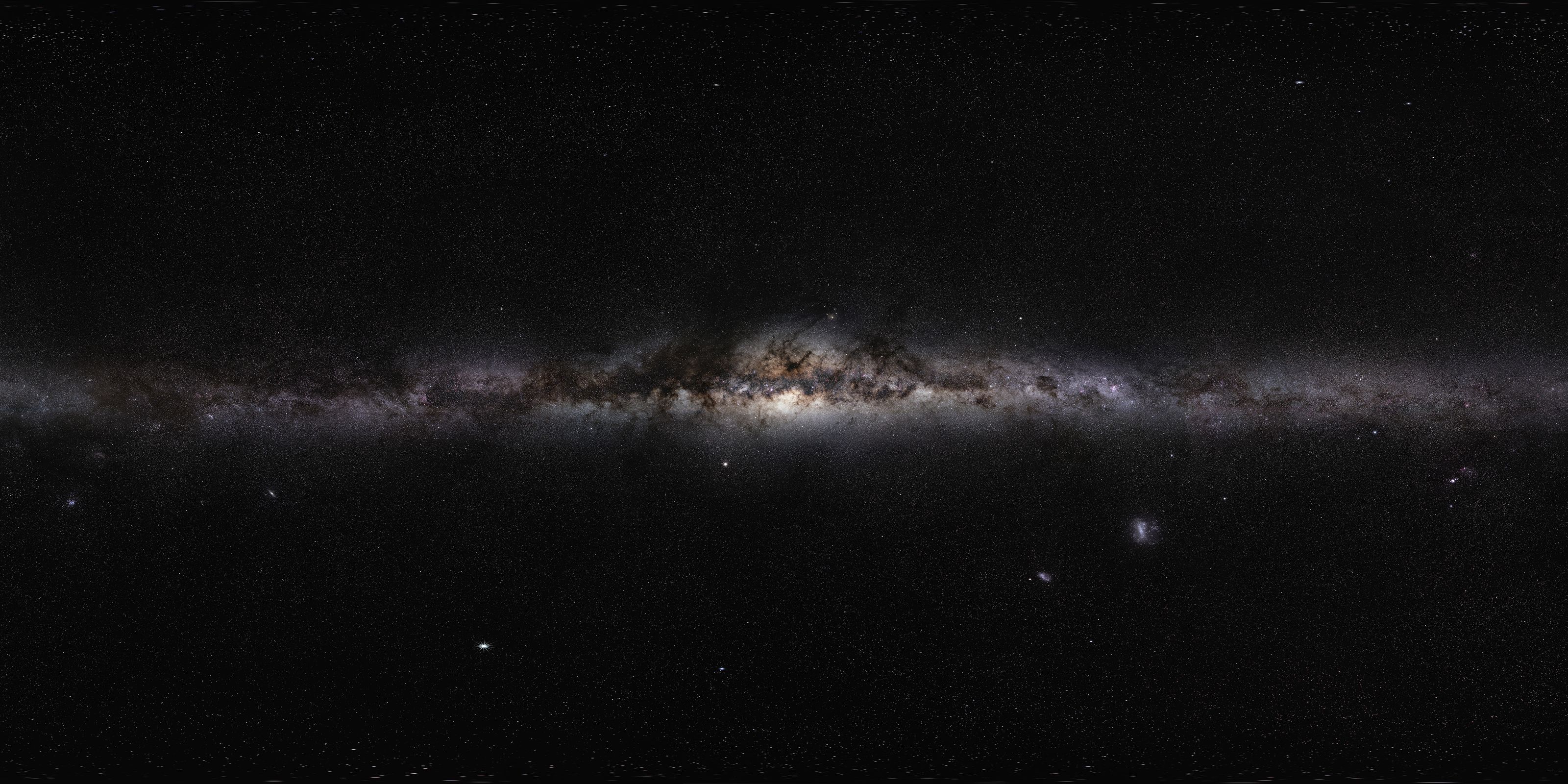
This is the Milky Way, seen from inside.
And almost every light in this photograph is another galaxy.
It is the smallest first step imaginable.
It is also the farthest we have ever gone.
Voyager 1 is still out there
—
kilometres away. Light itself needs to cross that.
In
—
Around the 2030s
The power runs out, and the radio goes quiet.
It keeps going.
In 40,000 years
It drifts past another star.
In a billion years
The record will still play.
“To the makers of music — all worlds, all times.”
Hand-etched on the Golden Record
Timothy Ferris · Jon Lomberg · Linda Salzman Sagan
NASA/JPL-Caltech
and the HUDF team
Scott Buckley
Voyager 1 has travelled another 0 km.
For the curious
How do you write to someone who shares no language with you? How do you gain speed for free? How do you hear 23 watts from the far side of the Sun's reach? Six things worth understanding, each one something you can play with.
01 · The cover
The cover is an instruction manual with no words.
No alphabet, no numbers, no units. Whoever finds it shares nothing with us except physics. Keep scrolling to read it the way they would have to.
How to play it
The record, seen from above.
The stylus is in place, starting at the outside. The dashes around the rim are a binary number: the time one turn should take, 3.6 seconds, counted in units of 0.70 billionths of a second.
How long it lasts
The record, seen from the side.
The stylus rests on the edge. The binary number underneath is the playing time of one side: about an hour.
The sound is a picture
Part of the record is not audio at all.
This is what the signal looks like at the start of a picture. The number below it gives the length of one scan line: about 8 milliseconds.
Draw it line by line
512 vertical lines make one image.
The striped frame shows the lines being laid side by side. The circle underneath is what the first picture should look like. If they see a circle, they have it right.
Where this came from
A map to the Sun, drawn with pulsars.
Fourteen lines run from our Sun to fourteen pulsars. Length is distance, and the ticks give each pulsar's exact flash rate. No two tick alike, so the pattern fixes one place in the galaxy, and one moment in time.
The key to everything
Two circles: the hydrogen atom.
The most common atom there is. When its electron flips, it gives off a radio wave 21 centimetres long, lasting 0.70 billionths of a second. That one length and that one time are the ruler and the clock for every other mark on the cover.
02 · The contents
Everything we chose to say.
116 pictures, greetings in 55 languages, the sounds of the planet and 90 minutes of music. Run your cursor or finger across the record to read it. Click a greeting or a sound to hear the real recording.
Brighter bars have the real thing behind them: every greeting, most of the sounds, and the seven pictures NASA is free to release. The other pictures and all of the music are still under copyright, so they are named here but not shown or played.
Try it
How a picture becomes sound
Each picture is stored in the groove as a wave: 512 scan lines, with brightness as the height of the wave. This simulates the first one, a plain circle, being drawn back out of the signal.
Listen
One message is in Morse code
Among the sounds of ships and trains is a short burst of Morse. It spells a Latin motto: ad astra per aspera. Through hardship, to the stars.
“This is a present from a small distant world, a token of our sounds, our science, our images, our music, our thoughts, and our feelings. We are attempting to survive our time so we may live into yours.”Jimmy Carter, in the message carried on the record, 1977
03 · The trick
Taking speed from a planet.
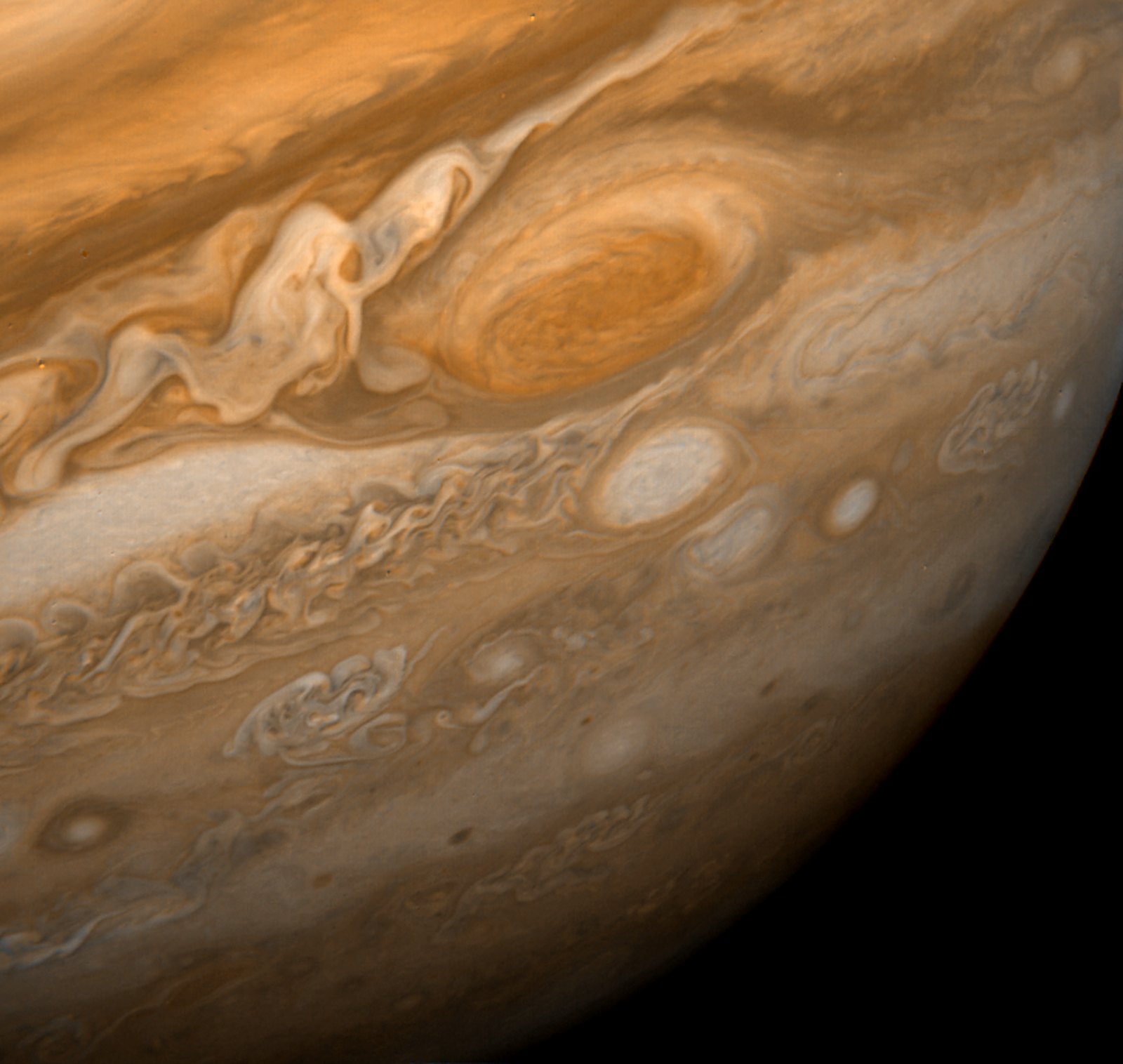
The rocket alone could not throw Voyager out of the solar system. Jupiter did. Drag across the Jupiter view to choose where the spacecraft aims, and watch what it leaves with.
Seen from Jupiter (left), the spacecraft falls in and climbs back out at the same speed. Only its direction changes. But Jupiter is itself moving around the Sun at 13 km/s, so seen from the Sun (right) that turn adds to the spacecraft's speed, or takes from it. The path is coloured by speed around the Sun.
The maths
In the planet's frame the trajectory is a hyperbola with eccentricity e = 1 + r_p·v∞² / μ, and the asymptotes turn through δ = 2·asin(1/e). Speed at infinity is conserved.
Here μ = 1.267 × 10⁸ km³/s² and U = 13.07 km/s, with an approach velocity chosen to match Voyager 1's v∞ of about 10.8 km/s. The simulation integrates the two-body problem numerically. Voyager 1 passed about 4.9 Jupiter radii from the planet's centre and left roughly 10 km/s faster. Jupiter slowed by about 30 cm per trillion years.
The proof is in the flight data
The Sun's gravity slows a departing spacecraft all the way out. Every flyby shows up as a jump. Stay above the dashed line and you never come back. Move across the chart to read it.
Reading the chart
The dashed curve is solar escape velocity, v_esc ≈ 42.12 / √r[AU] km/s. Both spacecraft left Earth on orbits still bound to the Sun, and Jupiter alone put them over the line. Voyager 2's Neptune flyby is the odd one: it passed over the north pole to reach Triton and lost heliocentric speed. Data points are 4 days apart, so the brief, much sharper peaks at closest approach are clipped. Data: NASA/JPL Horizons.
04 · The whisper
Hearing 23 watts from interstellar space.
Voyager's transmitter is about as strong as a refrigerator bulb. Drag the spacecraft outward and watch what is left of the signal when it reaches a 70-metre dish on Earth.
If a command had left Earth the moment you opened this page, it would have covered — so far. That is — of the way. It would arrive —, and the answer would take just as long to come back.
The link budget
P_t ≈ 23 W at X-band (8.4 GHz). The 3.7 m high-gain antenna gives G_t ≈ 48 dBi. A 70 m Deep Space Network dish at about 70% efficiency has A_eff ≈ 2,700 m². Received power falls with the square of distance, so bit rate is traded for distance: 115.2 kbit/s at Jupiter, 160 bit/s today. The widening beam in the picture is not to scale; the real one is about half a degree across.
05 · The machine
1970s hardware, still running.
Built from about 65,000 parts and launched with less computer memory than a single photo on your phone. Pick a part.
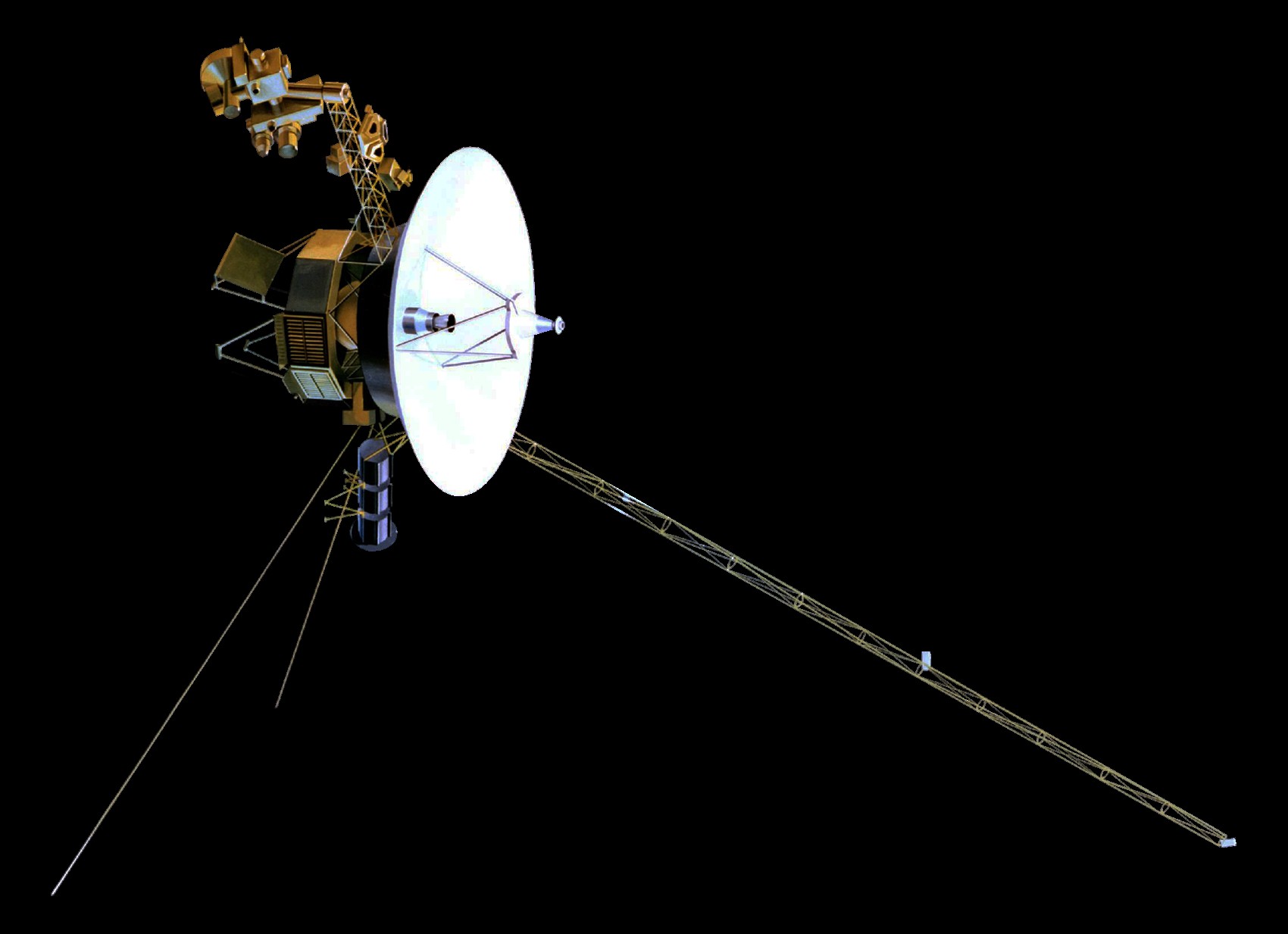
NASA/JPL-Caltech · spacecraft model
Keeping it alive
In November 2023 Voyager 1 began returning gibberish. Engineers traced it to one failed memory chip, and in April 2024 moved the affected code elsewhere in memory, by radio, with a 45-hour round trip per command.
As power drops, heaters and instruments are switched off one at a time. By 2025 each craft was down to about three working science instruments. Status notes here reflect NASA reports through 2025.
How we know Voyager 1 left: its plasma wave instrument measured an electron density near 0.08 per cm³, about forty times higher than inside the heliosphere, while solar particles dropped away and galactic cosmic rays rose.
06 · The distance
How far that really is.
First in powers of ten, where every step is ten times farther than the last. Then switch to true scale, and watch everything we have ever reached collapse into one point.
Units, and where the solar system ends
1 astronomical unit (AU) is the mean Earth–Sun distance, 149,597,870.7 km. 1 light-year is 63,241 AU. One light-day is 173.14 AU, or 25.9 billion km.
"Leaving the solar system" depends on which edge you mean. Voyager 1 crossed the heliopause, where the solar wind gives way to interstellar gas, on 25 August 2012. The Sun's gravity reaches far beyond that, out to the Oort cloud of icy bodies. Voyager 1 will need about 300 years to reach its inner edge and something like 30,000 years to clear the far side.
Sources
Where everything comes from.
Every photograph, recording and number on this page, with its origin and its licence.